
How to Do Affiliate Marketing: A 6-Step Guide for Beginners
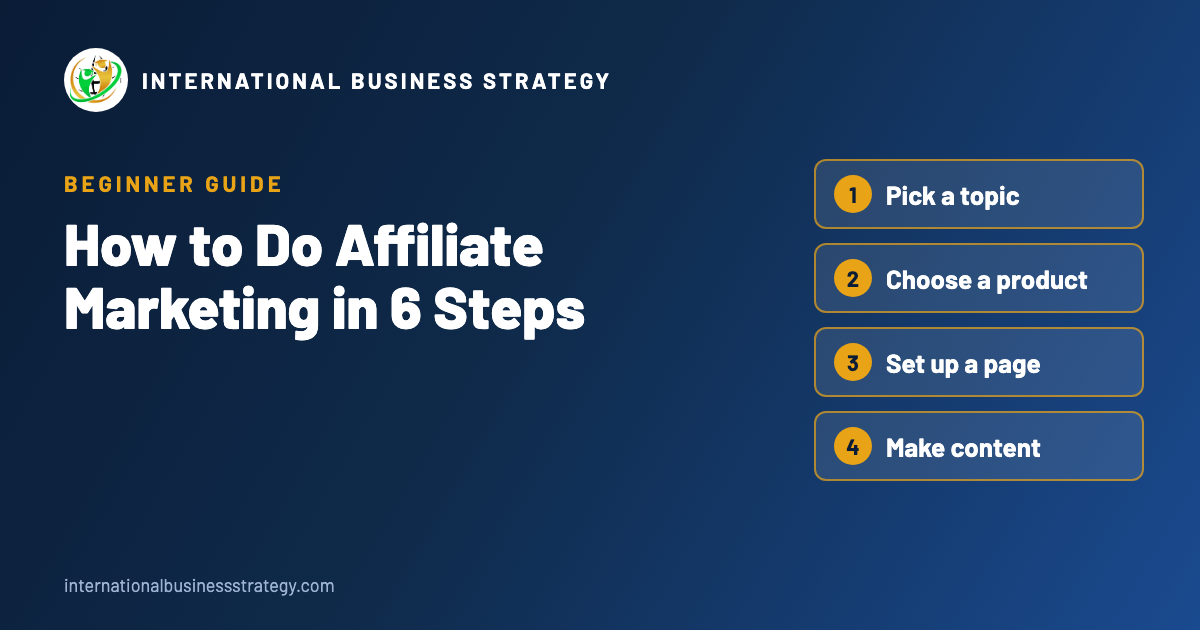
Affiliate marketing means recommending someone else's product and earning a commission when a person buys through your link. The idea is simple. Doing it well takes patience.
Below are the six steps, in the order that tends to save beginners the most wasted time. Results vary a lot and depend on your effort, your audience and the product, so treat this as a map, not a promise. If you want the basics first, read What Is Affiliate Marketing?.
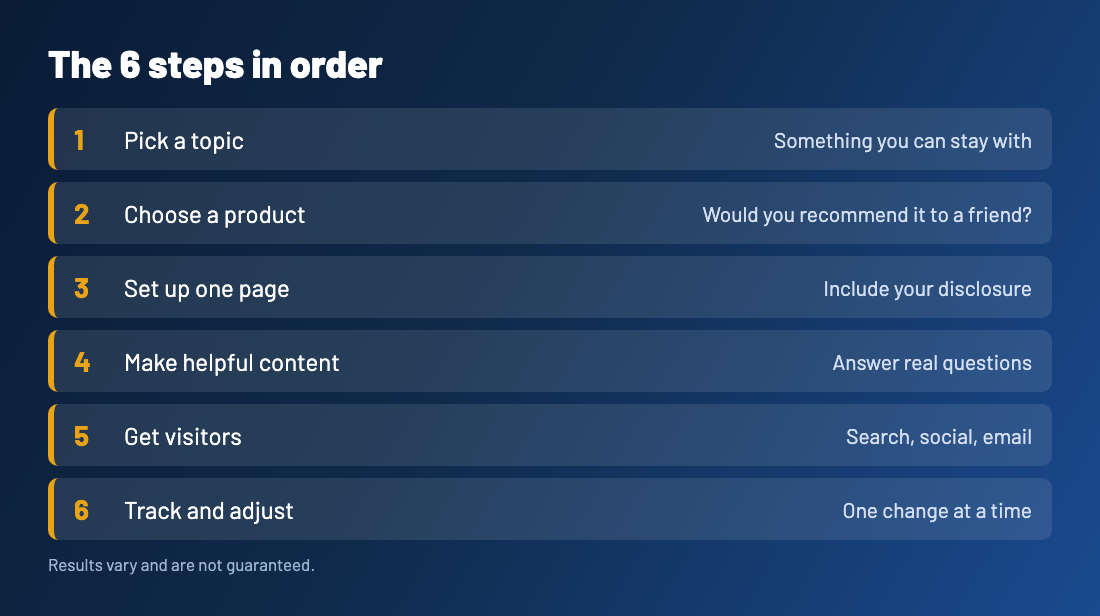
Step 1: Pick a topic you can stay with
Choose a subject you can write or talk about for months without getting bored. Then check that real people are looking for help with it. A few searches and a look at what others publish will tell you if there is interest.
Step 2: Choose a product worth recommending
Ask one question: would I recommend this to a friend? Read the seller's affiliate terms, check the refund policy, and make sure you understand how and when commissions are paid. A higher payout does not make a poor product a good one. Our guide to high-ticket affiliate marketing explains the difference between low-ticket and high-ticket offers.
Step 3: Set up one place to send people
A simple page or blog is enough to start. Say clearly that you may earn a commission if someone buys through your link. In the United States the FTC expects affiliates to disclose this, and honest disclosure also builds trust.
Step 4: Make helpful content
Answer the questions your audience actually asks: how a product works, who it suits, who it does not suit. Posts, short videos and emails all work. Our affiliate marketing for dummies article is a good example of a beginner-friendly format.
Step 5: Get visitors
Start with free methods: search, social media, communities and email. Follow each platform's rules and never spam. Paid traffic can come later, once you know what converts.
Step 6: Track and adjust
Look at clicks, sign-ups and sales. Change one thing at a time so you know what made the difference. Keep what works and drop what does not.
Where the free training fits
If you would rather see a working example than read about one, the free training webinar includes a demo of the Affiliate Business System. You can also browse the on-demand webinars, the courses and the resources vault, or send us a question.
Common beginner mistakes
- Promoting too many products at once. Focus on one or two until you understand what your audience wants.
- Skipping the disclosure. Always say when a link may earn you a commission.
- Expecting quick results. Most people need months of steady work before they see a pattern.
- Not reading the terms. Rules on payouts, refunds and allowed promotion methods differ for every program.
- Copying someone else's page word for word. Your own experience and examples are what make your content useful.
How long does it take?
There is no honest single answer. It depends on the hours you put in, how well you know your topic, the audience you can reach and the product you choose. Anyone who gives you an exact timeline is guessing.
Frequently asked questions
Do I need a website?
Not always. You can start with email or social media, but a simple page you control gives you one steady place to send people.
Do I need experience?
No. Many people start from zero. What matters is that you keep learning and testing.
Is it free to start?
Costs vary. Some programs are free to join and some training is paid. Always check the full cost before you commit.
Results vary and are not guaranteed. Nothing in this article is a promise of income.
About the author: Christopher Collman
Want to learn more?
Watch the free training